What Do Prince Rupert Residents Actually Do When the Power Goes Out?

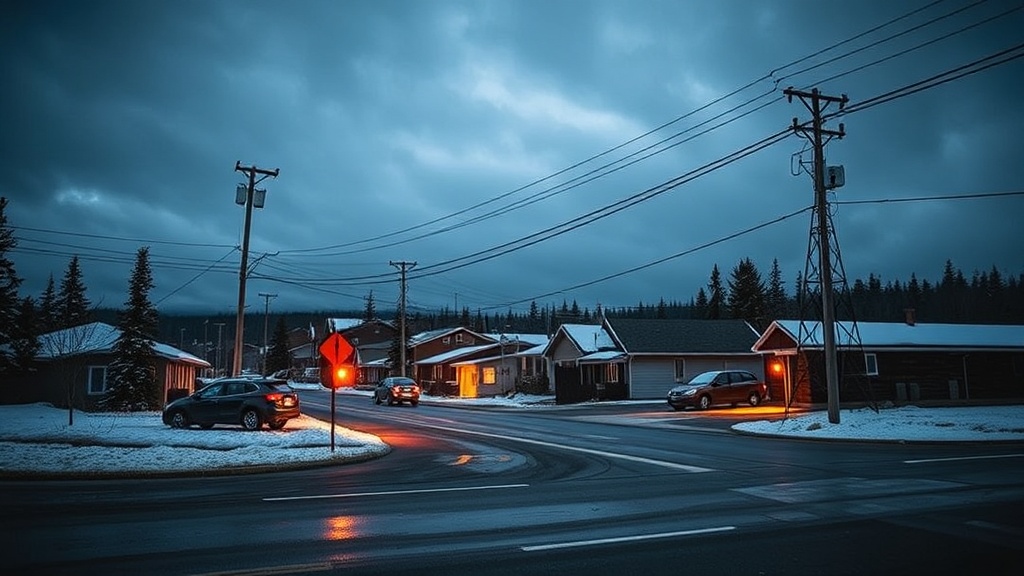
There's a persistent myth that life on the North Coast grinds to a halt whenever the weather turns — that we're somehow less equipped for the realities of coastal living than folks in bigger cities. That's nonsense. Prince Rupert residents have developed practical, community-centered ways of handling everything from winter storms to unexpected outages. We don't just survive here — we've built systems that keep our neighborhoods connected and our daily routines intact, even when the forecast throws us a curveball.
This isn't about emergency preparedness kits or stockpiling supplies (though those help). It's about the informal networks, local resources, and hard-earned wisdom that make Prince Rupert resilient. From the way we check on neighbors along 3rd Avenue West to the unofficial coordination that happens at Fulton Street Park, our community has evolved its own methods for weathering disruptions. Here's what actually works when the usual conveniences aren't available.
Where Can I Charge My Devices and Stay Connected?
When the power flickers out across Prince Rupert, the first question isn't about lighting candles — it's about keeping phones charged and staying informed. The Prince Rupert Library on 2nd Avenue West often becomes an informal gathering point, though their capacity depends on the outage scope. More reliably, residents head to Rushbrook Harbour or other waterfront areas where cellular signals remain strongest.
Local businesses along 3rd Avenue — particularly those with generator backup — have earned reputations as unofficial charging stations. The Fairview Plaza area businesses sometimes extend hours during extended outages, recognizing that their parking lots and power outlets serve a community function beyond commerce. It's worth knowing which storefronts maintain backup power before you need them.
Experienced Prince Rupert residents keep portable power banks charged and maintain car chargers as primary backup solutions. The cell towers on Mount Hays typically maintain service longer than residential power lines, so texting often works when other communication fails. We've learned that checking in with three neighbors — one to the east, one west, one across the street — creates enough redundancy that important information reaches everyone who needs it.
How Do I Find Out What's Actually Happening?
Official channels matter, but they're not always fastest. BC Hydro's outage map provides baseline information, yet local knowledge fills the gaps. The Prince Rupert Emergency Operations Centre coordinates official response, but their updates reach the community through multiple pathways — some formal, many informal.
Radio remains surprisingly vital here. CFNR 92.1 FM — the First Nations radio station based in Terrace with strong Prince Rupert coverage — often provides localized updates faster than national broadcasters. Their reporters understand the geography of our harbors and the specific challenges of our road network. During significant weather events, their broadcast schedule shifts to continuous coverage.
Word travels through established channels: the parents' networks at Roosevelt Park Elementary, the coordination among fishing industry workers at Cow Bay, the informal information sharing at Sunken Gardens Park. These networks predate social media and remain functional when digital infrastructure falters. Someone always knows someone who works for the city, the port, or the utility company — and that connection provides context that official statements sometimes lack.
What About Food and Supplies?
Prince Rupert's grocery stores — Save-On-Foods on 2nd Avenue West and Overwaitea — have refined their emergency protocols through experience. They know that panic buying helps nobody, and their staff live in the same neighborhoods they serve. During extended disruptions, these stores coordinate with suppliers through the Prince Rupert Port Authority to maintain supply chains that bypass damaged road infrastructure.
The fishing community provides an underappreciated safety net. Commercial fishers at Rushbrook Dock and Porpoise Harbour maintain independent power systems and substantial food reserves. Their willingness to share — not through formal programs but through neighborly exchange — has prevented genuine hardship during past disruptions. If you've built relationships at the docks or through local markets, these connections activate when needed.
Home preservation habits run deep here. Root cellars — yes, actual root cellars — remain functional in older homes throughout the Residential West neighborhood. Canning and preserving aren't hobby activities; they're practical responses to our geographic isolation. Residents who maintain these practices often have supplies that extend well beyond what modern refrigerators hold.
How Do We Check on Vulnerable Neighbors?
This is where Prince Rupert's community structure proves its worth. The city's municipal services maintain registries of residents requiring power-dependent medical equipment, but the actual checking happens person-to-person. Established patterns emerge: the daily dog walkers on McBride Street know which houses should have lights on, which vehicles should be in driveways, which curtains should be open by mid-morning.
Senior centers and community hubs — Jim Ciccone Civic Centre, the Rotary Senior Citizens Housing Society buildings — have protocols for wellness checks during disruptions. But again, informal networks parallel these official systems. The coffee groups that meet at the mall, the walking clubs that traverse Diana Lake Provincial Park trails, the faith communities centered on 5th Avenue East — these groups maintain contact lists and check-in rotations that function regardless of municipal coordination.
What's remarkable is how little this requires formal organization. After decades of shared experience, Prince Rupert residents simply know who lives where, who might need assistance, and how to reach them when usual communication methods fail. The person who delivers newspapers, the regular transit riders on BC Transit Route 60, the early morning crowd at the waterfront — these individuals form a distributed awareness network that no single organization could replicate.
What Resources Should I Know About Before the Next Storm?
Preparation in Prince Rupert means knowing systems, not just stocking supplies. The Province of British Columbia's emergency management resources provide frameworks, but local adaptation matters more than generic advice. Understanding which roads — like sections of Highway 16 approaching the Kaien Island causeway — typically flood first helps more than any emergency kit checklist.
The Prince Rupert Friendship House maintains community support services that expand during disruptions. Their connections to provincial and federal assistance programs create pathways for residents who need help beyond immediate physical needs. Similarly, Skeena Diversity Society coordinates multilingual support for newcomers who might not yet have established local networks.
Perhaps most importantly, know your block. Prince Rupert's compact geography — we're on an island, after all — means most residents live within practical walking distance of essential services. Mapping your actual walking routes to the Northern Health hospital on Summit Avenue, to the RCMP detachment on 6th Avenue East, to the Coast Guard station at Casey Point — this knowledge becomes valuable when vehicle travel proves impossible.
Why Does Prince Rupert's Approach Actually Work?
Our methods succeed because they're embedded in daily life, not treated as special emergency procedures. The same relationships that organize softball at Charles Hays Secondary School transform into coordination networks during disruptions. The familiarity developed through years of shopping at the same stores, attending the same events at the Lester Centre of the Arts, walking the same harborside routes — this creates social infrastructure that can't be manufactured quickly.
Geographic isolation forced innovation. We can't wait for external rescue — the ferry schedule and weather windows don't accommodate urgency. So we developed self-reliance that looks like community interdependence. Every resident knows that their preparedness affects their neighbors, and vice versa. There's no opting out of this mutual obligation when you live on Kaien Island.
The rain, the wind, the occasional power interruption — these aren't aberrations in Prince Rupert. They're features of the place we've chosen to live. Our response systems evolved through repeated exposure, refined by people who understood that waiting for perfect conditions means waiting forever. We manage because we've practiced, because our networks are genuine, because the person who might help you tomorrow is someone you recognize from the grocery store today.
When the next storm rolls in off the Pacific — and it will — Prince Rupert will handle it the same way we always have: practically, collectively, with the confidence that comes from having done this before. Keep your batteries charged, know your neighbors, and remember that the community infrastructure here runs deeper than any power line.